
M3U Plus vs Xtream Codes API for IPTV Playlist Updates

Quick answer
When updating IPTV playlists, M3U Plus and Xtream Codes API are two common methods used to access channels and metadata. M3U Plus typically involves a direct URL pointing to a playlist file, often updated manually or on a scheduled basis. Xtream Codes API, by contrast, is a dy...
Reviewed Against
• Xtream Codes username, password, and server-URL login flows
• M3U and M3U Plus playlist URLs, refreshes, and import behavior
• Server-URL formatting, HTTP response handling, and account-entry failure patterns
Applies To
• Portal-style logins that need a server URL plus account credentials
• Playlist-based IPTV setups that rely on M3U or M3U Plus links for channel data
• Errors caused by malformed URLs, wrong credentials, expired tokens, or unreachable playlist endpoints
Does not apply when
• You are using only an M3U playlist URL with no Xtream-style portal login at all.
• Your app is using a portal or stalker-style workflow instead of a playlist URL.
• The provider confirms the service is down or the account has been deliberately blocked upstream.
Corroborating Resources
HTTP response status codesUseful when an IPTV app surfaces 401, 403, 404, or 5xx style errors during login or playlist refreshes.
URL structure referenceHelpful for checking server URLs, source links, and path/query mistakes in portal or playlist setups.
Topic Cluster
Part of the IPTV cluster
Browse practical IPTV articles about IPTV, including setup choices, troubleshooting paths, and follow-on guides. This page sits in compare options for that topic path.
On this page
M3U Plus vs Xtream Codes API for IPTV Playlist Updates
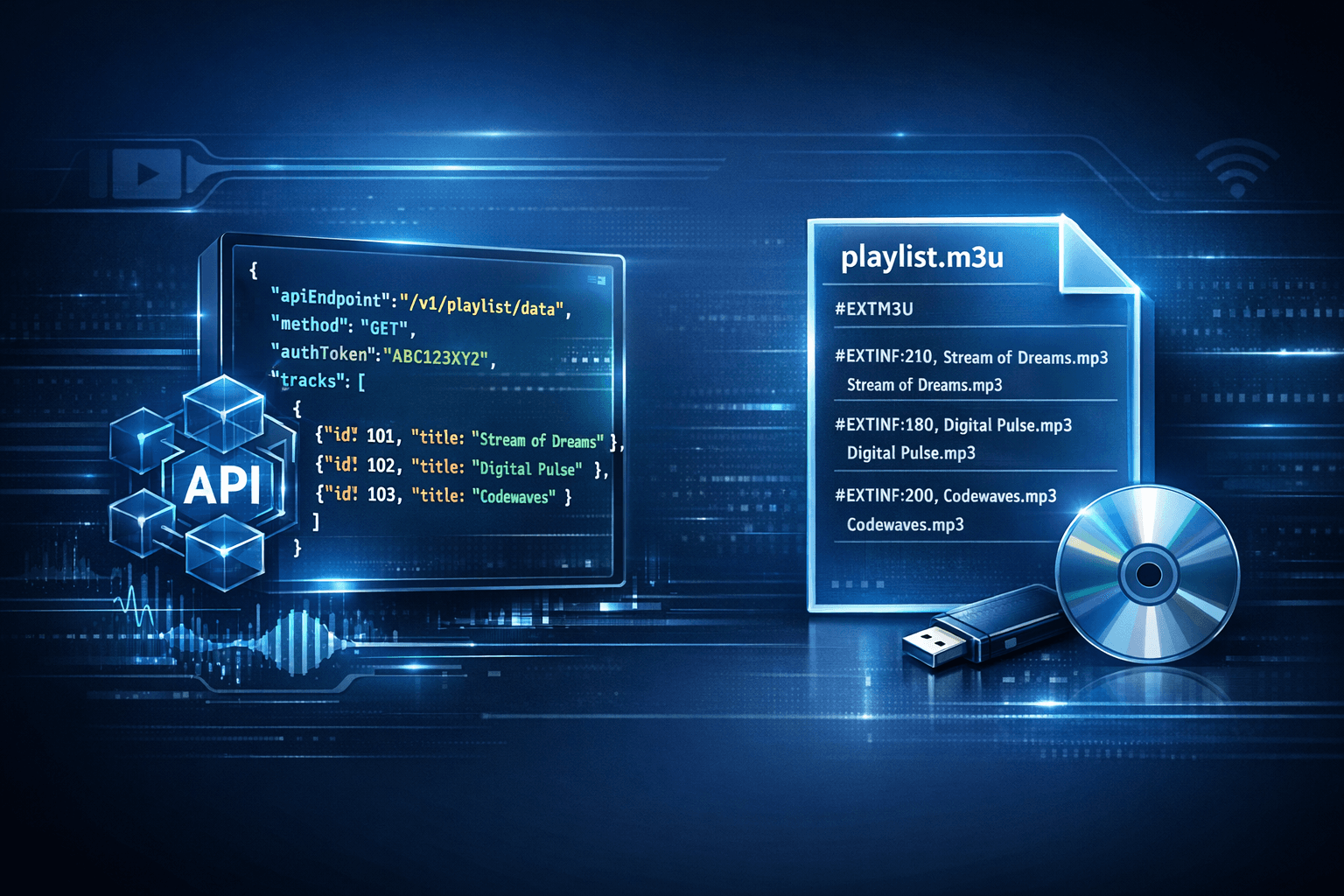
When updating IPTV playlists, M3U Plus and Xtream Codes API are two common methods used to access channels and metadata. M3U Plus typically involves a direct URL pointing to a playlist file, often updated manually or on a scheduled basis. Xtream Codes API, by contrast, is a dynamic endpoint that allows IPTV apps to fetch updated channel lists, EPG (Electronic Program Guide) data, and other metadata automatically.
For users deciding between these, the choice depends on how their IPTV app supports updates, the desired level of automation, and the quality of metadata needed. Xtream Codes API usually offers smoother updates and richer data, while M3U Plus provides simplicity and wider compatibility.
What you'll learn
- Core technical differences between M3U Plus and Xtream Codes API
- Setup and update process for each
- Strengths and limitations of both methods
- Common mistakes and how to avoid them
- Ideal usage scenarios for each update method
Understanding M3U Plus Playlist Updates
What is M3U Plus?
M3U Plus is an extended form of the classic M3U playlist format. It typically involves a URL that points to a .m3u or .m3u8 file containing channel streams and their metadata. This file can be hosted on servers and is downloaded by the IPTV app either manually or at intervals.
How does M3U Plus update work?
- The IPTV app fetches the playlist URL.
- Downloads the entire M3U file.
- Parses the playlist entries.
- Displays the channels based on the file contents.
Updates depend on how often the playlist owner refreshes the file and how frequently the app re-downloads it.
Strengths of M3U Plus
- Wide compatibility: Almost all IPTV apps support M3U playlists.
- Simplicity: Easy to share and use a direct URL.
- Portability: Can be used on various platforms without extra authentication.
Limitations of M3U Plus
- Manual refresh needed: Not typically auto-updated without app support.
- Metadata constraints: Limited to static data in the playlist file.
- Security: URLs can be shared or blocked easily.
How Xtream Codes API Updates Differ
What is Xtream Codes API?
Xtream Codes API is a RESTful API format designed to provide IPTV clients with more dynamic access to channel lists, live EPG data, VOD content, and user-specific information. Instead of fetching a static playlist file, the IPTV app sends requests with login credentials, receiving JSON or XML responses.
Update process using Xtream Codes API
- User credentials and API URL are entered into the IPTV app.
- The app requests channel lists and EPG data dynamically.
- Updates occur in real-time or on a schedule.
Benefits of Xtream Codes API
- Automatic updates: Data always fresh without manual playlist changes.
- Rich metadata: Supports EPG, channel categories, logos, and VOD.
- User authentication: Access control through username and password.
Drawbacks
- Compatibility: Not all IPTV apps support Xtream Codes API.
- Setup complexity: Requires correct API access and credentials.
- Dependency on server API: If API is down, no updates.
Setting Up Playlist Updates: Step-by-Step
For M3U Plus
- Obtain the M3U Plus playlist URL from your provider.
- Open your IPTV app and navigate to playlist management.
- Select the option to add a playlist via URL.
- Paste the M3U Plus URL.
- Save and refresh the playlist.
- Schedule automatic refresh if supported.
For Xtream Codes API
- Obtain API URL, username, and password from your IPTV provider.
- Access your IPTV app's API setup area.
- Input the Xtream Codes API credentials.
- Save the configuration.
- Trigger a manual channel refresh or enable auto-update.
Common Mistakes and Troubleshooting
Frequent errors with M3U Plus
- Using an incorrect or expired playlist URL.
- Not refreshing the playlist to get updates.
- Attempting to use M3U playlists in apps without proper update scheduling.
Frequent errors with Xtream Codes API
- Typing wrong username or password.
- Using outdated or unsupported API endpoints.
- Network or server downtime causing failed updates.
Troubleshooting Tips
- Double-check URLs and credentials carefully.
- Refresh manually before assuming errors.
- Clear app cache or restart the IPTV app if updates fail.
- Confirm the IPTV app supports your chosen update method.
Who Should Use Which Method?
- M3U Plus suits: Users seeking a straightforward setup, those using basic IPTV apps or devices without API support.
- Xtream Codes API suits: Users looking for richer metadata, automated and dynamic updates, and apps with API support.
If your IPTV app lacks Xtream Codes API support, stick to M3U Plus or consider switching to apps like IPTV Smarters or TiviMate that do support API.
M3U Plus vs Xtream Codes API: Key Differences Comparison Table
| Feature | M3U Plus | Xtream Codes API |
|---|---|---|
| Setup Input | Playlist URL | API URL + username + password |
| Update Type | Manual or scheduled file fetch | Dynamic, real-time API queries |
| Metadata Support | Basic (channel name, URL) | Rich (EPG, logos, categories) |
| Ease of Use | Simple | Moderate (requires correct creds) |
| Compatibility | Universally supported | Limited to API-compatible apps |
| Security | Typically less secure | Supports token-based authentication |
| Best Use Scenario | Basic IPTV players, simple needs | Advanced apps needing fresh data |
Conclusion
M3U Plus and Xtream Codes API offer distinct approaches to IPTV playlist updating. M3U Plus emphasizes simplicity and compatibility with a fixed playlist file, while Xtream Codes API provides a dynamic, feature-rich update experience requiring authentication. Select the method that aligns with your IPTV app capabilities and your need for up-to-date content and metadata.
FAQ
What happens if my M3U Plus playlist stops updating?
Ensure the URL is still valid and your IPTV app refreshes the playlist correctly. Consider switching to an API method for better live updates.
Can I use both methods together?
Some IPTV apps allow multiple playlists using different methods. However, mixing can cause confusion unless carefully managed.
Is Xtream Codes API still widely supported?
Despite some past regulatory issues, many IPTV providers and apps continue to support Xtream Codes API or similar interfaces since it improves user experience.
For additional troubleshooting related to IPTV playlist errors and authorization, see IPTV Smarters Invalid Details Error and Authorization Error topic.
For app-specific update issues, refer to TiviMate Playlist Not Updating After Refresh.
Keep exploring
More explainers that connect naturally to this setup, workflow, or troubleshooting path.
TiviMate is a popular IPTV player app for Android TV and similar devices, known for its advanced channel management options. Organizing favorites and groups in TiviMate lets you customize your IPTV watching experience by categorizing.

When you switch channels on your IPTV service and the screen freezes or lags, it’s frustrating and disrupts your viewing experience. IPTV freezing during channel switching is most often caused by network delays, buffering, or the IPTV.

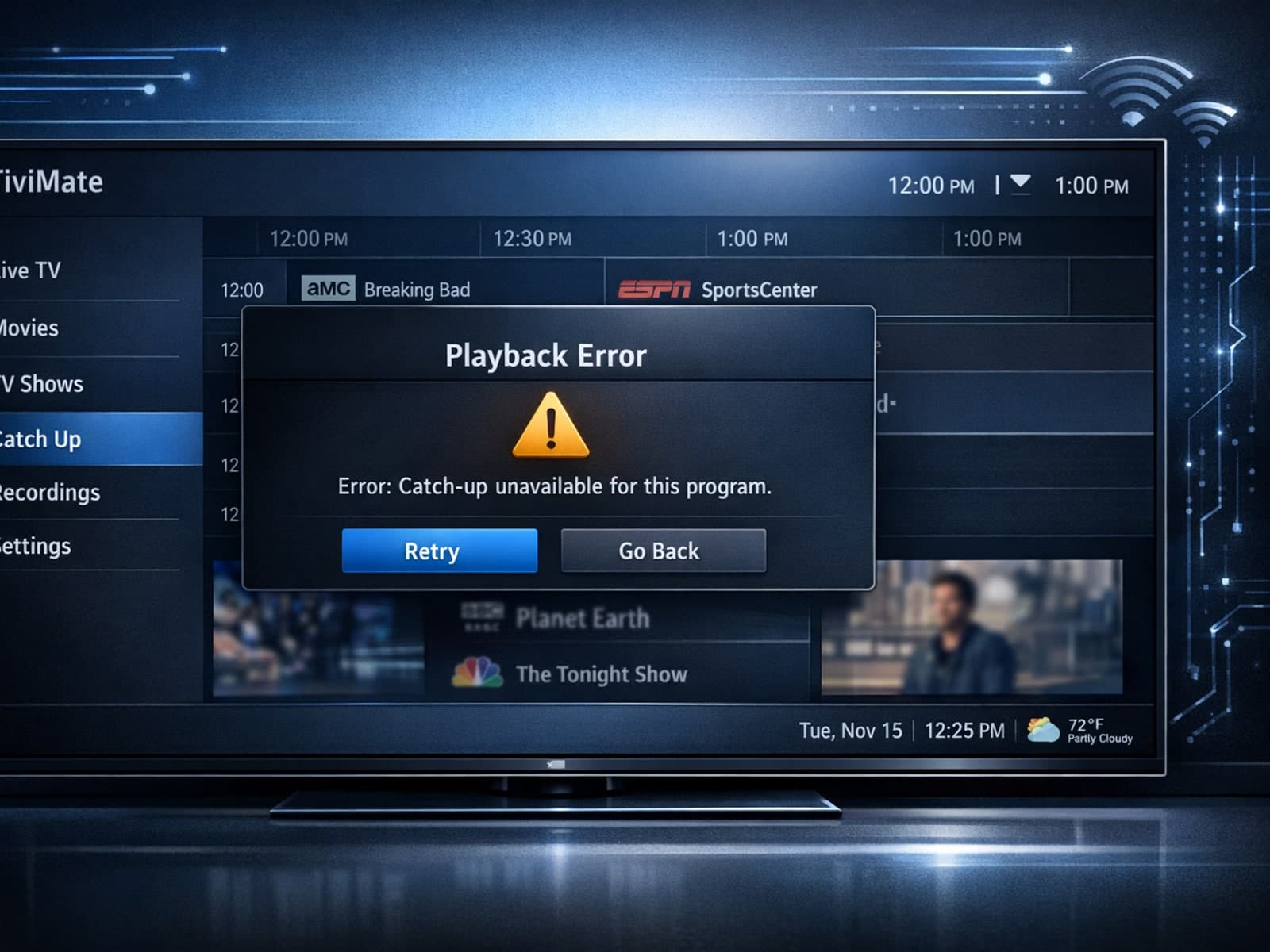
If your catch-up feature in TiviMate isn’t working, the fundamental reasons often lie in your IPTV playlist source or server configuration rather than the app itself.
