
Fire TV Stick Storage Issues Causing IPTV Lag: Fixes and Tips

Quick answer
If your IPTV streams on Fire TV Stick are lagging or buffering unexpectedly, one often overlooked cause is storage constraints on the device. The Fire TV Stick has limited internal storage designed mainly for operating system components and a few apps. When storage fills up, i...
Reviewed Against
• Fire TV and Fire OS device capabilities, networking, and storage limits
• Home-network checks such as Wi-Fi strength, Ethernet fallback, DNS changes, congestion, and local storage pressure
Applies To
• Fire TV Stick, Fire TV Cube, and Fire OS playback or networking questions
• Playback problems that change with connection quality, device load, app cache state, or time of day
Does not apply when
• You are troubleshooting a smart-TV app or set-top box with a different hardware and settings path.
• Only one channel, event, or provider-side endpoint is failing while the rest of the service stays stable.
Corroborating Resources
Fire TV device specifications overviewHelpful for checking Fire TV hardware families, platform differences, and device-level constraints.
Fire TV streaming media player specsUseful for codec, storage, Wi-Fi, and Ethernet-adapter expectations on Fire TV sticks and boxes.
Android TV video and game troubleshootingUseful for Wi-Fi, updates, app cache, and playback troubleshooting steps that also mirror IPTV failure paths.
Android TV storage helpHelpful when playback issues point to low storage, cache pressure, or app-data cleanup decisions.
Topic Cluster
Part of the Buffering cluster
Buffering fixes, network bottlenecks, device slowdowns, and the fastest checks to stabilize IPTV playback. This page sits in troubleshoot and fix for that topic path.
Start here in this topic
On this page
Fire TV Stick Storage Issues Causing IPTV Lag Explained
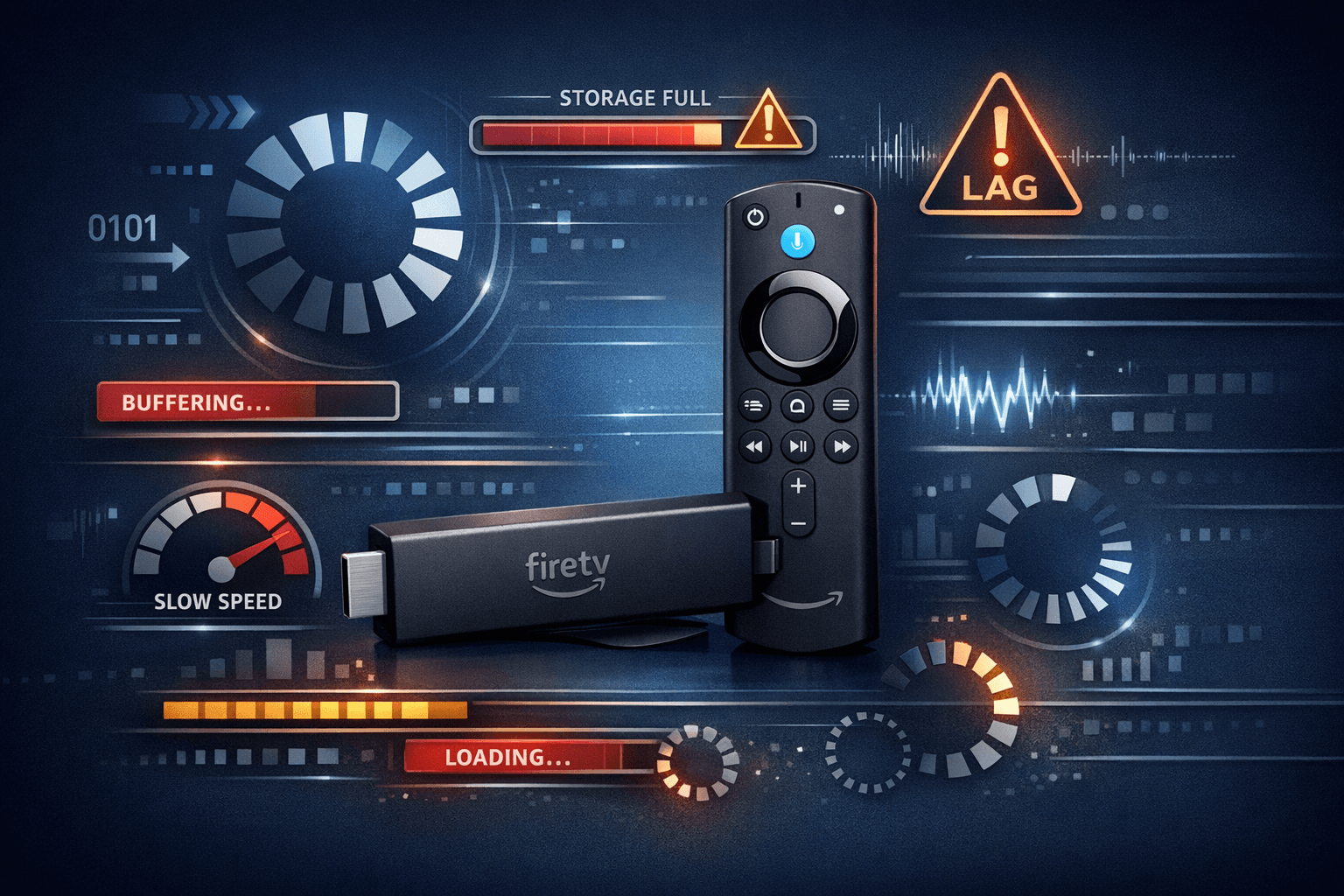
If your IPTV streams on Fire TV Stick are lagging or buffering unexpectedly, one often overlooked cause is storage constraints on the device. The Fire TV Stick has limited internal storage designed mainly for operating system components and a few apps. When storage fills up, it affects app performance including IPTV players by limiting cache space needed for smooth playback.
This article provides a clear set of steps to identify, troubleshoot, and resolve storage-related IPTV lag on Fire TV Stick devices. Follow the practical advice here to regain fluid IPTV streaming.
What you'll learn
- How to check Fire TV Stick storage and identify space issues
- Methods to free up internal storage without losing IPTV data
- Adjusting IPTV app settings to reduce storage use
- When and how to consider external storage options
- Common mistakes causing IPTV lag unrelated to storage
How Storage Affects IPTV Playback on Fire TV Stick
Why Limited Storage Impacts Streaming
The Fire TV Stick uses its internal storage to cache streaming data and hold temporary files for apps. IPTV apps like TiviMate or IPTV Smarters buffer the stream locally to smooth playback.
When storage is nearly full:
- Cache writes slow or fail, causing buffering during live streams
- App updates and temporary files cannot be processed efficiently
- System resources are constrained, reducing responsiveness
Performance hiccups cascade into continuous buffering or lag, especially with high-quality IPTV streams.
Typical Storage Capacity and Usage
Fire TV Stick models vary, but many have 8-16 GB internal storage:
- OS and pre-installed apps take 4-6 GB
- User-installed apps and data share remaining space
IPTV apps alone usually do not require gigabytes, but accumulated cache and other apps may push the device near full capacity.
Step 1: Checking Your Fire TV Stick Storage Space
First, confirm if storage is the source of IPTV lag by checking available space:
- Go to Settings on your Fire TV Stick home screen.
- Navigate to My Fire TV > About > Storage.
- Review used and available storage space.
If available storage is below 1 GB, this is a strong indicator storage may be causing IPTV playback issues.
What If Storage Looks Fine?
Lag may be due to network, app bugs, or IPTV server issues. Refer to other troubleshooting guides if storage is sufficient.
Step 2: Freeing Up Storage Space Safely
Uninstall Unused Apps
Removing apps you don't use frees space:
- On Settings > Applications > Manage Installed Applications, select unused apps.
- Choose Uninstall.
Clear App Cache and Data
Clearing cache can free temporary space without removing the app:
- Under the same Manage Installed Applications, select your IPTV app or other large apps.
- Choose Clear cache. Avoid clearing data unless you want to reset login/settings.
Remove Unneeded Media Files
If you occasionally transfer media files or downloads to the Fire TV Stick, consider moving or deleting them.
Using External Storage Options
Fire TV Stick models do not natively support large external USB storage. However, USB OTG on Fire TV Stick 4K and above may allow:
- Connecting small flash drives for limited file storage
- Moving some data to reduce internal usage
Make sure to check device specifics before attempting external storage use.
Step 3: Optimizing IPTV App Settings to Reduce Lag
Many IPTV apps allow you to adjust caching or buffering settings:
- Lower cache size or buffer time to reduce storage demands
- Disable features that store lots of data locally (e.g., recording or storing EPG data)
Refer to the IPTV app's settings menu or user guide to find these options.
Common Mistakes Causing Misdiagnosed IPTV Lag
- Assuming IPTV lag is always network-related while ignoring storage issues
- Clearing IPTV app data unnecessarily, causing login resets
- Overloading Fire TV Stick with multiple heavy apps competing for space
When to Use a Different Troubleshooting Approach
- If your Fire TV Stick has ample free storage but you experience IPTV lag, investigate network settings: see Best WiFi Settings for IPTV on Fire TV Stick to Reduce Buffering.
- For lag specific to Fire TV Cube or 4K Max, check Fire TV Cube vs Fire TV Stick 4K Max for IPTV: Key Differences and Use.
Troubleshooting Checklist: Fire TV Stick Storage and IPTV Lag
| Checkpoint | Action Needed | Notes |
|---|---|---|
| Storage level low (<1 GB) | Free up apps and clear caches | First step to reduce lag |
| Multiple large apps installed | Uninstall unnecessary apps | Focus on seldom used apps |
| IPTV app cache setting high | Reduce buffer/cache size | Try smaller buffers in IPTV app |
| System clutter (temp files etc) | Restart Fire TV Stick | Clears temporary files |
| External storage option | Use USB OTG carefully (if supported) | Limited device compatibility |
Steps to Reduce IPTV Lag from Fire TV Stick Storage Issues
- Check storage space via Fire TV Stick Settings.
- Identify and uninstall apps you no longer use.
- Clear cache of IPTV and other large apps.
- Move or delete any personal media files stored on the device.
- Restart the Fire TV Stick to refresh system resources.
- Adjust IPTV app settings to lower caching requirements.
- Consider supported external storage if available and compatible.
FAQ
Why does low storage cause IPTV lag on Fire TV Stick?
Limited storage restricts caching capabilities needed for smooth streaming buffer, resulting in buffering or lag.
Can I add external storage to the Fire TV Stick to fix lag?
Most Fire TV Sticks only support limited external devices via USB OTG. Compatibility varies so external storage is a partial remedy.
Is restarting the Fire TV Stick an effective way to reduce IPTV lag?
Yes, it clears temporary files and frees up memory, improving playback temporarily.
Conclusion
Storage issues on Fire TV Stick can directly cause IPTV lag by limiting cache space needed for seamless streaming. Regularly monitoring and freeing internal storage from unneeded apps, cached data, and files is a simple yet effective way to restore IPTV performance. Adjust IPTV app buffering settings and consider device restarts as part of ongoing maintenance. When storage is not the cause, explore network or app-specific troubleshooting next.
Understanding and managing Fire TV Stick storage safeguards your IPTV viewing experience from frustrating lag and buffering.
Keep exploring
More explainers that connect naturally to this setup, workflow, or troubleshooting path.
Using a VPN (Virtual Private Network) on your Amazon Firestick can sometimes slow down IPTV streaming, resulting in frustrating buffering issues.

If you are experiencing lag or buffering while watching IPTV on your Fire TV Stick, one common culprit is limited device storage. When the Fire TV Stick's internal memory fills up or gets fragmented, the IPTV app performance can degrade.
If you watch IPTV on your Fire TV Stick, having the right Wi-Fi settings can significantly improve your streaming experience by minimizing buffering and lag.
